Enjoy 5% OFF + FREE shipping on orders $49+! Use Code: 202512AK5

What to Compare Before Buying RayNeo Air 4 Pro Prescription Lenses
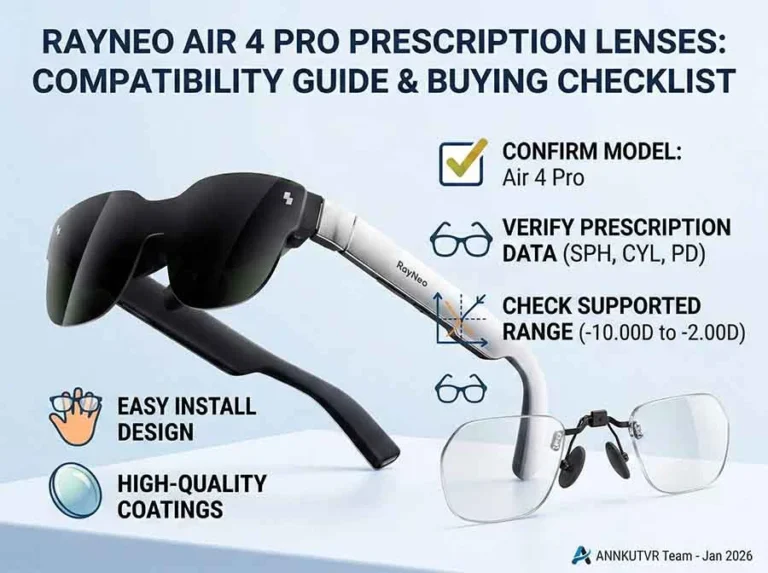
RayNeo Air 4 Pro prescription lenses are not something I would buy based on price alone. Before I place an order, I want to know whether the insert is truly built for Air 4 Pro, whether my prescription falls within the supported range, and whether the lens setup will stay comfortable for long movie, gaming, or work sessions. That is where most buyers make better decisions—or costly mistakes. RayNeo’s official pages confirm a magnetic prescription-lens path, a supported range of myopia 0 to -10.00D and astigmatism 0 to -2.00D on its prescription purchase page, and a lightweight 76g frame designed around adjustable fit.
Introduction
When I review the current top-ranking pages, I notice a pattern: most articles tell you that RayNeo Air 4 Pro supports prescription lenses, but fewer explain what actually matters before checkout. Some pages focus on specs, some on seller listings, and some on user complaints about blur or comfort. The better buying decision usually comes down to five things: prescription support, insert compatibility, lens coatings, thickness, and after-sales policy. That is the gap this article fills. Official RayNeo pages and support FAQs confirm the basics, while review and community-style pages reveal where buyers still get stuck: edge blur, fit, and assumption-based ordering.
Start With the Official Prescription Limits
The first comparison point is not shipping or price. It is whether your prescription is even within the officially supported range. RayNeo’s prescription purchase page says users with myopia 0 ~ -10.00D and astigmatism 0 ~ -2.00D can order prescription lenses from official optical partners, and users above those limits are not suitable for that official path. On the product page, RayNeo also says Air 4 Pro supports up to 1000 degrees of myopia, 800 degrees of hyperopia, and 200 degrees of astigmatism, with a magnetic frame for custom lenses. I treat the purchase page as the stricter buying reference, and the product page as broader compatibility context. If your prescription is high, mixed, or unusual, I would confirm the exact numbers before paying.
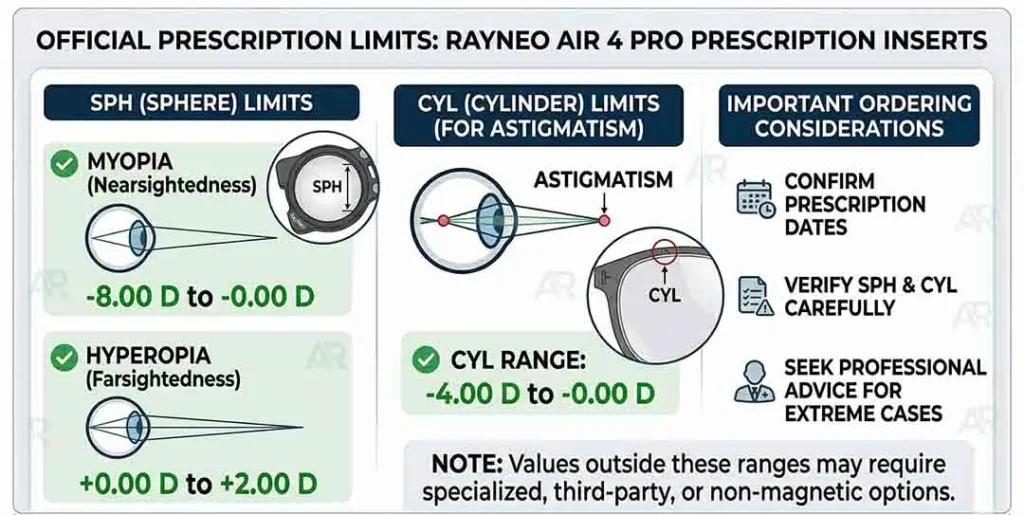
What I check on my prescription before ordering
I check three items first:
- SPH (Sphere) for myopia or hyperopia
- CYL (Cylinder) for astigmatism
- Whether my numbers stay inside the official partner range
If your values go beyond the purchase-page limits, the decision becomes less about convenience and more about risk management. The insert may still attach, but that does not guarantee good edge clarity or comfort.
Compare Model-Specific Fit, Not Generic “Air-Compatible” Claims
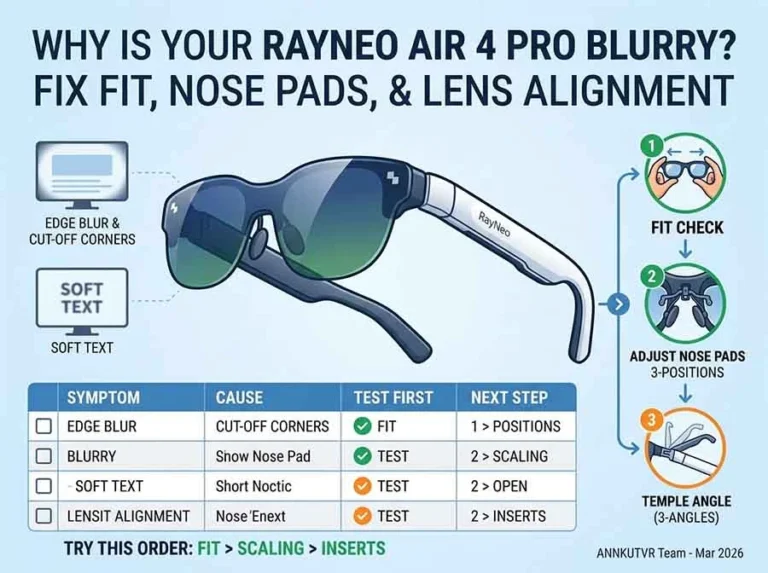
One of the easiest mistakes is assuming every insert labeled “RayNeo Air” will behave the same way. I do not buy that assumption. The better pages in the current SERP keep repeating one simple rule: verify the exact model, not just the brand family. RayNeo’s official materials confirm a magnetic frame and prescribe a dedicated lens-installation path, while fit-related support guidance says users who cannot see the entire screen should adjust the nose pad and temples for the best viewing angle. That means fit is not an afterthought. It is part of the optical result.
For a broader model-by-model overview, visit our RayNeo prescription lenses hub. It helps compare RayNeo Air 4 Pro, Air 2s, Air 3s, and Air 3s Pro insert options before you choose a product page.
Typical case
A common real-world buying case looks like this: a user with moderate myopia assumes any insert for the “Air series” is fine, skips model confirmation, and then ends up chasing blur, eye-box problems, or discomfort that has more to do with fit and alignment than with raw prescription power. This is exactly why I compare model name, insert format, and fit guidance before comparing price.
Lens Coatings Matter More Than Most Buyers Expect
Once fit and prescription range check out, I move to coatings. Air 4 Pro is sold around a 1200-nit HDR10 viewing experience, so reflections and surface wear matter more than they do on ordinary everyday glasses. A lens insert that fits but lacks a good anti-glare surface can still feel disappointing in actual use. This is where many generic listings under-explain the real-world difference. RayNeo’s hardware positioning around HDR10, high brightness, and premium visual output makes coating quality a practical buying factor, not just a nice-to-have.
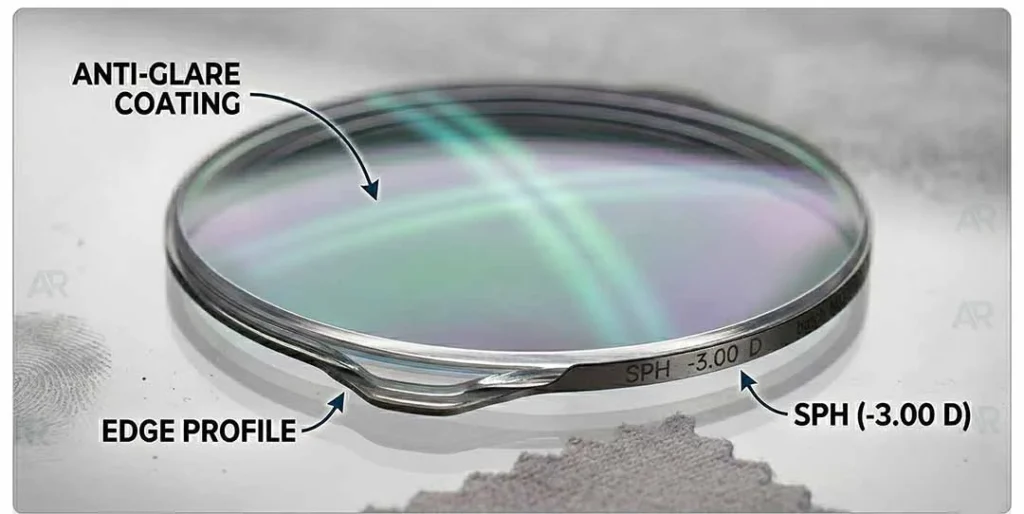
The coatings I prioritize
- Anti-glare for cleaner perceived contrast
- Anti-scratch for daily durability
- Easy-clean surface if you use the glasses often
If I were choosing between two similar inserts, I would usually choose the one with clearer coating details over the one with vague marketing copy.
High-Index Materials Become More Important as Prescription Strength Increases
If your prescription is stronger, lens thickness matters. High-index materials such as 1.67 or 1.74 are worth considering because they help reduce bulk. Thinner lenses are usually easier to live with inside an AR setup, especially when insert position, eyelash clearance, and visual comfort all matter. This is not just a cosmetic issue. A bulky insert can make a good hardware platform feel less refined in practice. At the same time, I would not treat high-index as a magic fix. It improves the odds of a cleaner, more comfortable setup, but fit and alignment still matter.
Compare Shipping, Returns, and Store Policy Separately From the Headset Warranty
This is where many buyers get caught. RayNeo’s store and support pages show 30-day return/exchange style protections, price protection, and 1-year warranty/craftsmanship support for the glasses depending on storefront and region. But custom prescription inserts are usually handled separately from headset hardware. I never assume the headset’s protections automatically cover the lens order. Before checkout, I compare:
- shipping fees
- import taxes
- remake policy
- defect handling
- region-specific return terms
The cheapest insert is not always the lowest-risk insert. If support is weak, the real cost can show up after delivery.
Compare Long-Session Comfort, Not Just “Can It Attach?”
This is the part many articles miss. I am not only comparing whether the insert can mount. I am comparing whether I can use it for a two-hour movie, a gaming session, or laptop work without constant readjustment. RayNeo’s official support FAQ says the simulated image is at 4 meters, and if you cannot see the full screen clearly, you should adjust the nose pad and temples. RayNeo also publishes a suitable IPD range of 56–70 mm in the FAQ, which tells me that alignment and face fit are central to the final experience. In short: a lens insert is successful only when clarity, comfort, and repeatability all come together.
My Buying Checklist Before I Order
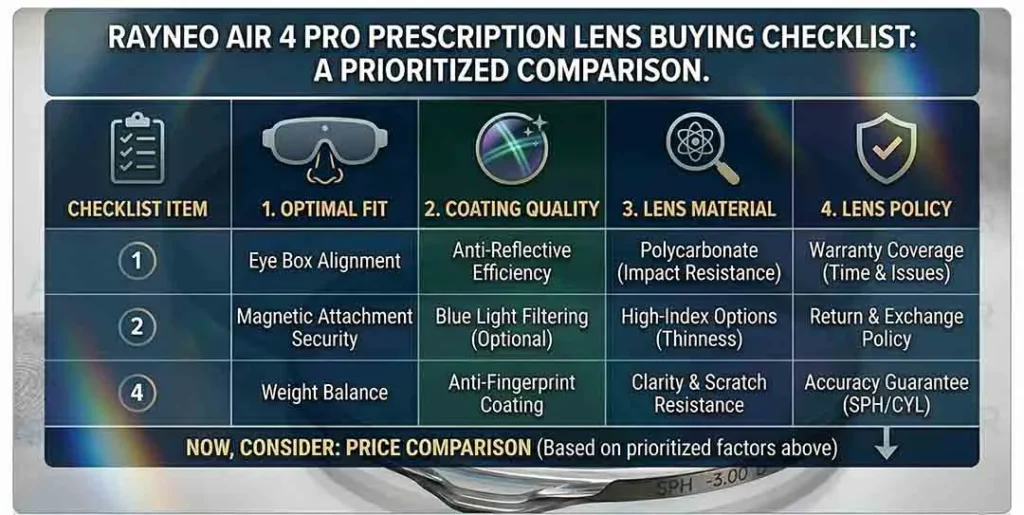
Here is the checklist I would personally use before buying:
| Factor | What I Compare | Why It Matters |
|---|---|---|
| Prescription range | I check whether my SPH and CYL values stay within the official supported range. | This helps reduce the risk of ordering an insert outside the safer official path. |
| Model-specific fit | I confirm that the insert is clearly intended for RayNeo Air 4 Pro, not just a generic “Air” model. | It reduces compatibility guesswork and lowers the chance of alignment issues. |
| Lens coatings | I compare anti-glare, anti-scratch, and easy-clean coating options. | These coatings affect daily clarity, reflections, and long-term usability. |
| High-index material | I look for 1.67 or 1.74 options if I have a stronger prescription. | Thinner lenses can improve comfort and reduce bulk inside an AR setup. |
| Comfort setup | I check whether the seller provides fit, alignment, or prescription review guidance. | Better guidance usually leads to a more comfortable long-session experience. |
| Shipping and returns | I compare shipping fees, taxes, remake policy, and region-specific return terms. | A lower price is not always better if after-sales support is weak. |
FAQ
What should I compare before buying RayNeo Air 4 Pro prescription lenses?
I compare prescription range support, model-specific fit, coatings, high-index materials, and return policy first. Those factors usually matter more than price alone. This matches the way the better current pages frame the decision: verify the exact model, prescription details, and insert fit before checkout.
Does RayNeo Air 4 Pro officially support prescription lenses?
Yes. RayNeo’s official product and prescription purchase pages both state that Air 4 Pro supports prescription use through a magnetic frame / official optical partner path.
What prescription range is officially supported?
RayNeo’s official prescription purchase page says the official optical partner range is myopia 0 ~ -10.00D and astigmatism 0 ~ -2.00D.
Why do some users still report blur after buying inserts?
Because blur is not always a prescription-only problem. RayNeo’s support FAQ says users who cannot see the whole screen should adjust the nose pad and temples, and it also publishes a suitable IPD range of 56–70 mm. That means fit, alignment, and face geometry still matter.
Are custom prescription lens orders refundable?
Sometimes, but you should not assume they are. Hardware storefront protections and custom-lens seller policies are often different, and return or remake rules can vary by provider and region.
Conclusion
If I had to reduce this buying decision to one sentence, it would be this: buy the insert that matches your prescription, your face fit, and your usage pattern—not just the lowest number on the price tag. RayNeo’s official pages give you the hard limits and the hardware context; the rest of the decision comes down to how carefully you compare coatings, thickness, compatibility, and store policy before checkout. If you are ready to move forward, start by checking check if your prescription falls within the supported range, then review full compatibility checklist, and when you are ready to buy, visit our RayNeo Air 4 Pro prescription lenses page.