Enjoy 5% OFF + FREE shipping on orders $49+! Use Code: 202512AK5

RayNeo GT vs GT Max vs iO: Display, Fit, IPD and Prescription Support Explained
RayNeo GT vs GT Max vs iO: Display, Fit, IPD and Prescription Support Explained
RayNeo GT, GT Max, and iO all entered global retail on September 4, 2026, but they are not three tiers of the same smart-glasses product.
That distinction matters before comparing specs.
RayNeo GT and GT Max are display-focused AR glasses. They connect to compatible devices and place a large virtual screen in front of you for movies, gaming, handheld consoles, and computer use.
RayNeo iO takes a different approach. It is a lightweight everyday AI HUD designed around notifications, captions, translation, AI responses, meetings, and other glanceable information.
For prescription wearers, the difference becomes even more important.
GT and GT Max make you think about display alignment, IPD, physical fit, and prescription inserts.
iO is closer to a conventional pair of everyday glasses, where the question becomes how prescription correction works alongside the original smart-glasses lens system.
If you already know you need vision correction, the RayNeo Prescription Lenses Hub is the easiest place to see the current ANNKUTVR options for each model.
RayNeo GT vs GT Max vs iO at a Glance
| Feature | RayNeo GT | RayNeo GT Max | RayNeo iO |
|---|---|---|---|
| Primary use | Movies, gaming, virtual display | Larger virtual display, movies, gaming | Everyday AI HUD |
| Display | Full-color Micro-OLED | Full-color Micro-OLED | Transparent monochrome MicroLED |
| Field of view | 46° | 59° | 23.5° |
| Default virtual display | 201″ | 267″ | Approx. 33″ viewed from 2 m |
| IPD approach | Fixed 64mm | S / M / L sizes | No GT Max-style S/M/L sizing |
| Weight | 68g | Approx. 78g | 33g |
| Main connection | Wired USB-C video | Wired USB-C video | Bluetooth |
| Built-in battery | No | No | Yes |
| Prescription approach | Prescription insert | Prescription insert | Everyday prescription solution |
RayNeo lists the GT and GT Max specifications on its official GT Series page, while iO specifications are available through the official RayNeo iO product page.
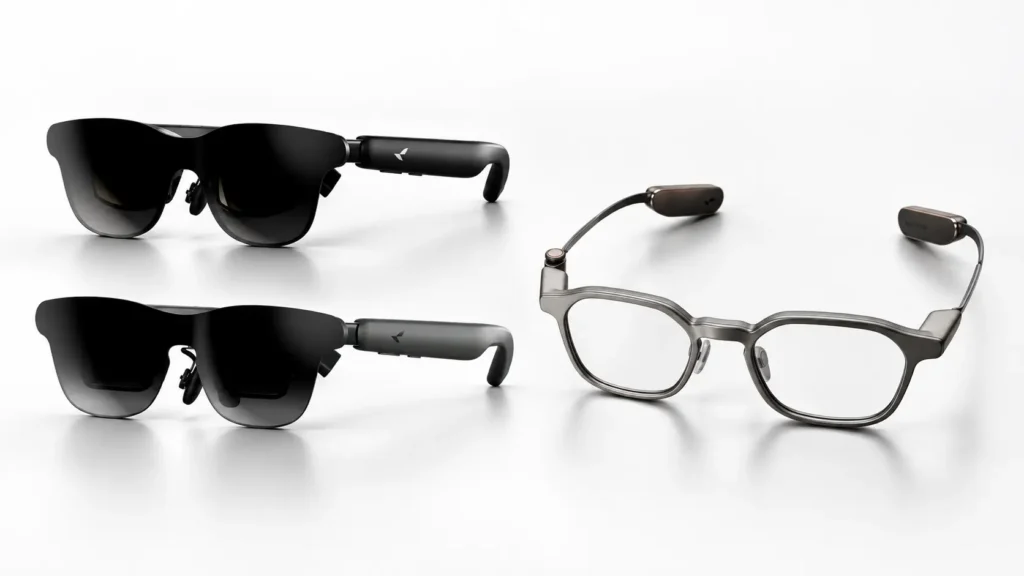
GT and GT Max Are Virtual Displays. iO Is an Everyday HUD.
The easiest way to understand the lineup is to separate what each device is trying to display.
GT and GT Max are designed around full-color virtual screens.
Connect one to a compatible phone, computer, handheld, or other video source and it functions much more like a private external display than a conventional pair of glasses.
RayNeo lists a 46° FOV for GT and a wider 59° FOV for GT Max, with default virtual display sizes of 201 inches and 267 inches respectively.
That makes the GT Series the more relevant choice if your priorities are:
Movies.
Steam Deck or handheld gaming.
Laptop use.
A private travel display.
A large virtual screen.
RayNeo iO is not trying to do the same job.
Its transparent monochrome HUD is designed for information such as notifications, captions, translation, AI responses, teleprompter content, and meeting assistance.
RayNeo lists iO at 33g, much lighter than either GT model, which makes sense for a device designed around extended everyday wear.
So this is not really:
GT vs GT Max vs iO — which one is better?
It is closer to:
GT / GT Max = entertainment and large-display use
iO = everyday AI and productivity
That distinction should come before any prescription decision.
IPD Is One of the Most Important Differences Between GT and GT Max
The standard RayNeo GT uses a fixed 64mm IPD.
GT Max takes a different approach and is sold in three hardware sizes:
S: below 64mm
M: 64–67mm
L: above 67mm
RayNeo explains these ranges in its GT Series support documentation and specifically connects correct IPD selection with better optical alignment and reduced peripheral blur.
This matters because IPD and prescription correction solve different problems.
Your prescription values correct refractive error.
IPD affects where your eyes sit relative to the optical system.
A perfectly made prescription insert cannot automatically correct a device that is poorly aligned with your eyes.
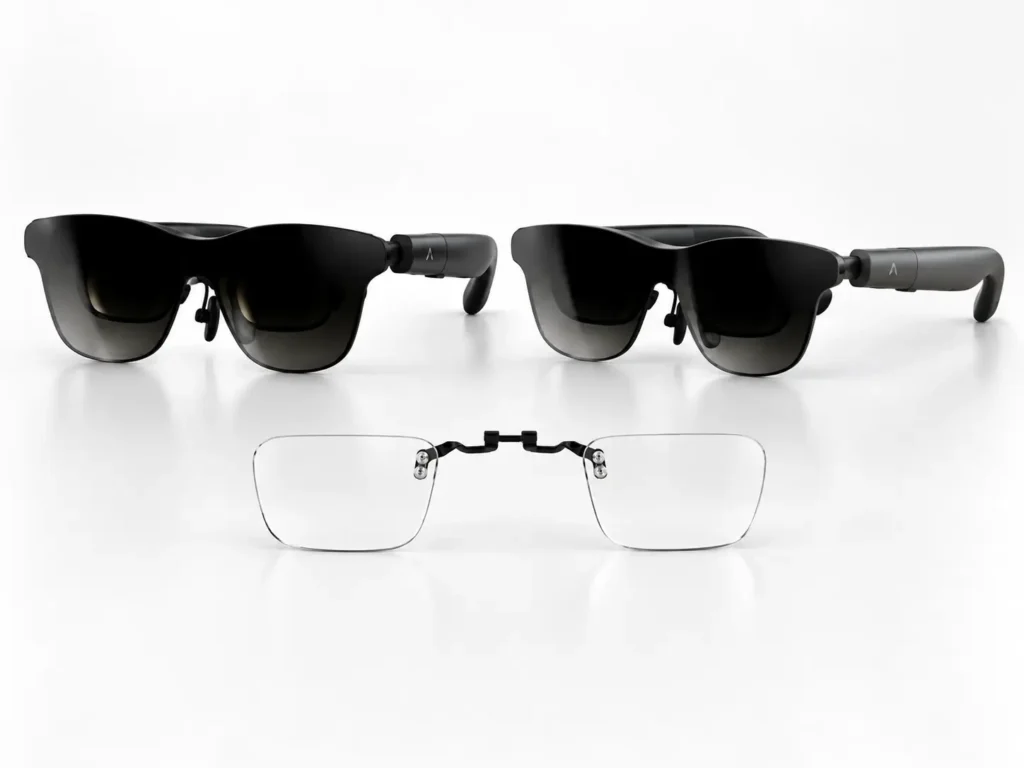
Users around the 64mm boundary should check the sizing guidance carefully, because 64mm sits directly at the transition between RayNeo’s S and M ranges.
GT and GT Max Support Prescription Lenses, but They Use Model-Specific Solutions
RayNeo officially includes Prescription & Vision Support in its GT Series documentation and provides a prescription lens sample/frame with the device.
That confirms something important:
Prescription correction is part of the intended GT and GT Max usage model. It is not an aftermarket problem invented by accessory manufacturers.
However, GT and GT Max should still be treated as separate physical products.
A similar name does not mean one prescription insert automatically fits both.
ANNKUTVR therefore provides separate solutions:
RayNeo GT Max Prescription Lenses
If you normally need glasses to see distant content clearly, there are two questions to answer before ordering:
Does the headset’s IPD and physical fit work for me?
Do I also need prescription correction?
They are related, but they are not interchangeable.
A prescription lens fixes your eyesight.
It does not change the headset’s optical geometry.
RayNeo iO Uses a Different Prescription Approach
RayNeo iO should not be treated as another GT-style display product.
It is much closer to an everyday pair of smart glasses.
You continue looking through the lenses at the real world while the transparent HUD places information into your normal view.
RayNeo already sells a dedicated iO with Prescription Lenses, which confirms that prescription wear is part of the official iO product strategy.
That creates a different question for people who already purchased the standard version:
Can I add prescription correction after I already own RayNeo iO?
This is where an aftermarket solution becomes particularly relevant.
The ANNKUTVR RayNeo iO AI Glasses Prescription Lenses are designed to install without removing the original RayNeo iO lenses. The prescription lenses are aligned and pressed into place over the existing lens structure.
That is fundamentally different from the GT and GT Max insert approach.
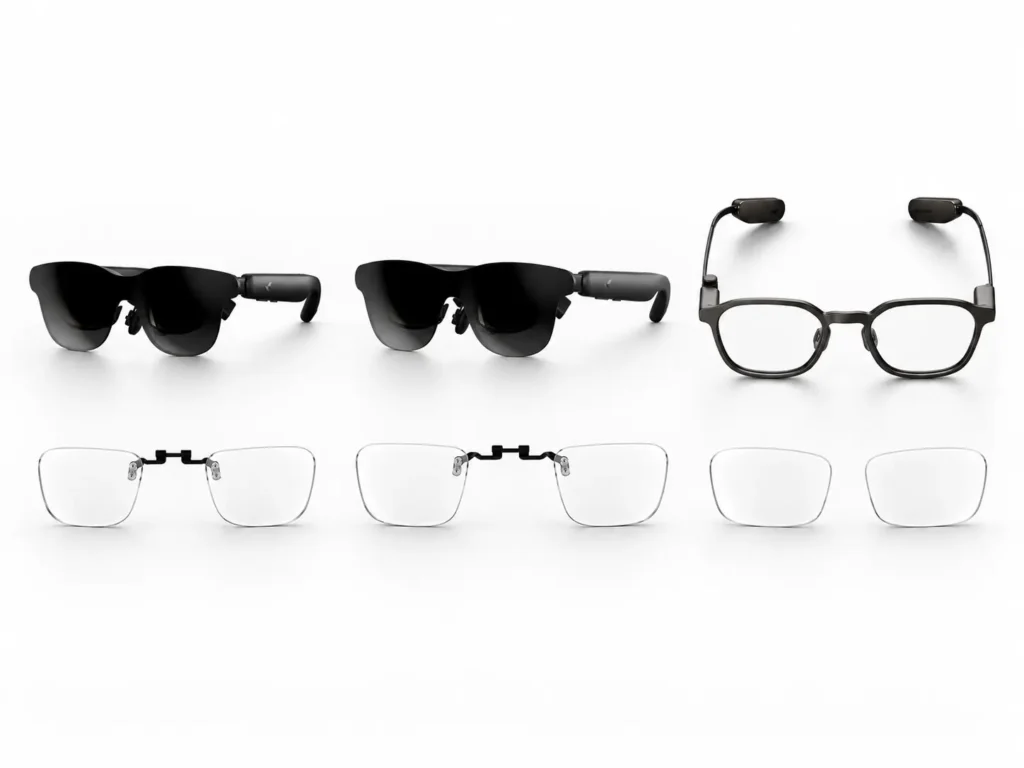
Which RayNeo Model Makes More Sense for a Prescription Wearer?
The prescription question should come after the device question.
If You Want Movies, Gaming, or a Large Virtual Screen
Compare GT and GT Max first.
GT is lighter and uses a 46° FOV with a fixed 64mm IPD.
GT Max expands the viewing area to 59° and adds S, M, and L IPD sizing.
Once you know which device geometry is more appropriate, then deal with your prescription correction.
Do not reverse that order.
If You Want Everyday AI Glasses
Treat RayNeo iO as a separate category.
Its purpose is not to place a cinema-sized full-color screen in front of you.
It is designed around an always-available transparent HUD, AI assistance, captions, translation, and daily information.
For prescription users, the more relevant question becomes:
Can I get the vision correction I need while keeping the original iO display and everyday wearing experience intact?
That is a different problem from finding the correct optical position inside GT Max.
Prescription, IPD, and Fit Are Not the Same Problem
This distinction becomes especially important when someone says:
My RayNeo looks blurry.
That alone does not tell you what is wrong.
Blur or incomplete clarity can potentially involve several separate variables:
IPD alignment
Frame height and nose-pad position
The user’s actual prescription
RayNeo’s own GT Series support documentation treats nose-pad adjustment, IPD sizing, and prescription support as separate parts of the fitting process.
That is the right way to troubleshoot it.
If moving the glasses higher or lower changes the image, that suggests a fit or alignment component.
If GT Max is the wrong IPD size, a prescription lens will not resize the optical system.
If the alignment is correct but the image still looks unfocused because of your refractive error, that is where prescription correction becomes relevant.
So the useful troubleshooting order is:
Device → IPD → Fit → Prescription
not:
Blur → immediately change the prescription.
GT, GT Max, or iO? Start With the Job You Need the Glasses to Do
RayNeo launched GT, GT Max, and iO at roughly the same time, but they should not be treated as a simple good-better-best ladder.
RayNeo GT
46° FOV, 68g, fixed 64mm IPD, and a focus on portable virtual display use.
RayNeo GT Max
59° FOV, a larger virtual display, and S / M / L IPD sizing for users who need more flexibility in optical fit.
RayNeo iO
33g, transparent AI HUD, built-in battery, and a much more everyday-eyewear-oriented design.
For prescription wearers, the decision order is straightforward:
Use case → IPD and physical fit → prescription requirement → lens solution
If you have not yet decided which model you own or plan to buy, start with the ANNKUTVR RayNeo Prescription Lenses Hub.
If the device is already decided, go directly to the matching solution:
RayNeo GT Max Prescription Lenses
RayNeo iO AI Glasses Prescription Lenses
If you’re choosing between GT and GT Max, the next things to check are your IPD, preferred field of view, and whether GT Max’s S, M, or L sizing better matches your eyes.
References
RayNeo. RayNeo GT Series AR Glasses.
https://www.rayneo.com/pages/rayneo-gt-series-ar-glasses
RayNeo. Support RayNeo GT Series AR Glasses.
https://www.rayneo.com/pages/support-rayneo-gt-series-ar-glasses
RayNeo. RayNeo iO AI Glasses.
https://www.rayneo.com/products/rayneo-io-ai-glasses
RayNeo. RayNeo iO AI Glasses with Prescription Lenses.
https://www.rayneo.com/products/rayneo-io-ai-glasses-prescription
RayNeo. RayNeo Expands Consumer AR Lineup: Unveiling RayNeo iO Smart Glasses and Cinematic RayNeo GT Series. 21 Aug. 2026.
https://www.prnewswire.com/news-releases/rayneo-expands-consumer-ar-lineup-unveiling-rayneo-io-smart-glasses-and-cinematic-rayneo-gt-series-302856495.html