Enjoy 5% OFF + FREE shipping on orders $49+! Use Code: 202512AK5

Glasses for VR: Should You Wear Glasses or Use Prescription Lens Inserts?
Yes, you can wear glasses with many VR headsets when the headset and frame leave enough clearance. Glasses for VR can still be practical for occasional use, while prescription lens inserts are often simpler for frequent sessions because they remove the eyeglass frame from inside the headset. The better option depends on your exact headset, frame size, prescription, and how often you use VR.
Can You Wear Glasses in VR?
Many VR headsets, including specific Meta Quest models and PS VR2, can accommodate glasses, but the adjustment method varies by model. Quest 2 uses a separate glasses spacer, while Quest 3 integrates depth adjustment into its facial interface; follow the guidance for the exact Quest model rather than assuming every headset uses the same spacer. PlayStation states that you can keep your glasses on with PS VR2, although frame size and shape can still affect clearance. AR glasses such as XREAL and RayNeo use a different form factor and generally rely on a model-specific prescription lens frame or insert when vision correction is required.
Problems with Wearing Glasses Inside a VR Headset
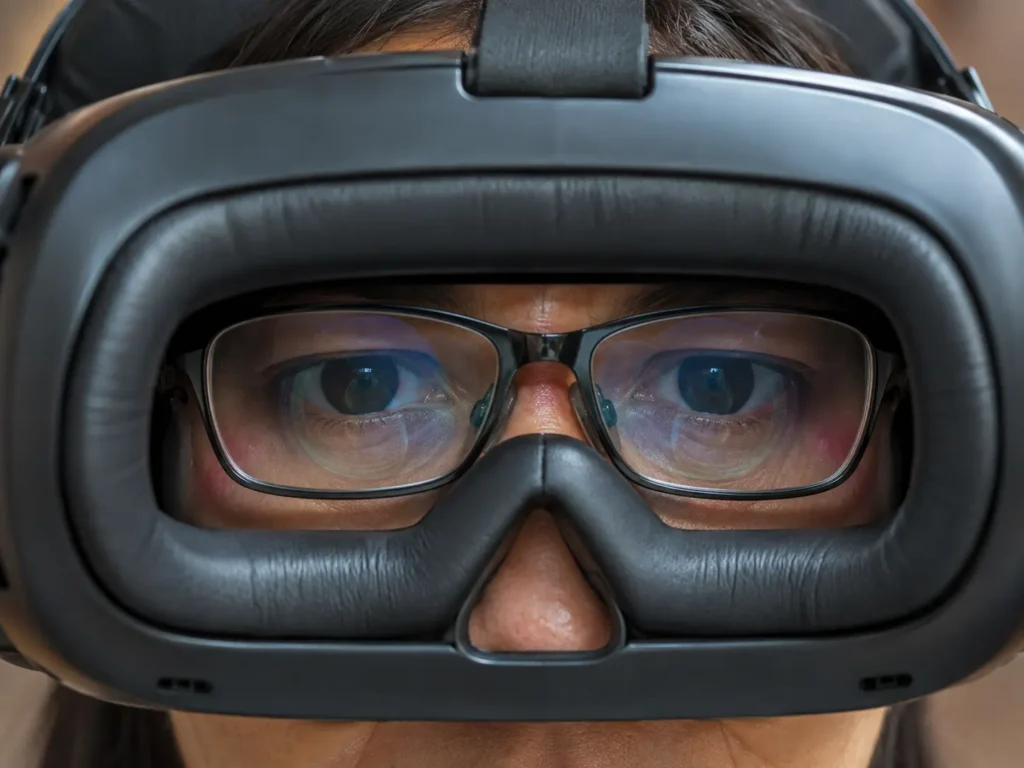
Glasses can create pressure around the nose and temples, fog during active play, shift out of alignment, or sit close to the headset optics. Scratches or other damage are possible if the eyeglass lenses or frames contact the headset optics during movement.
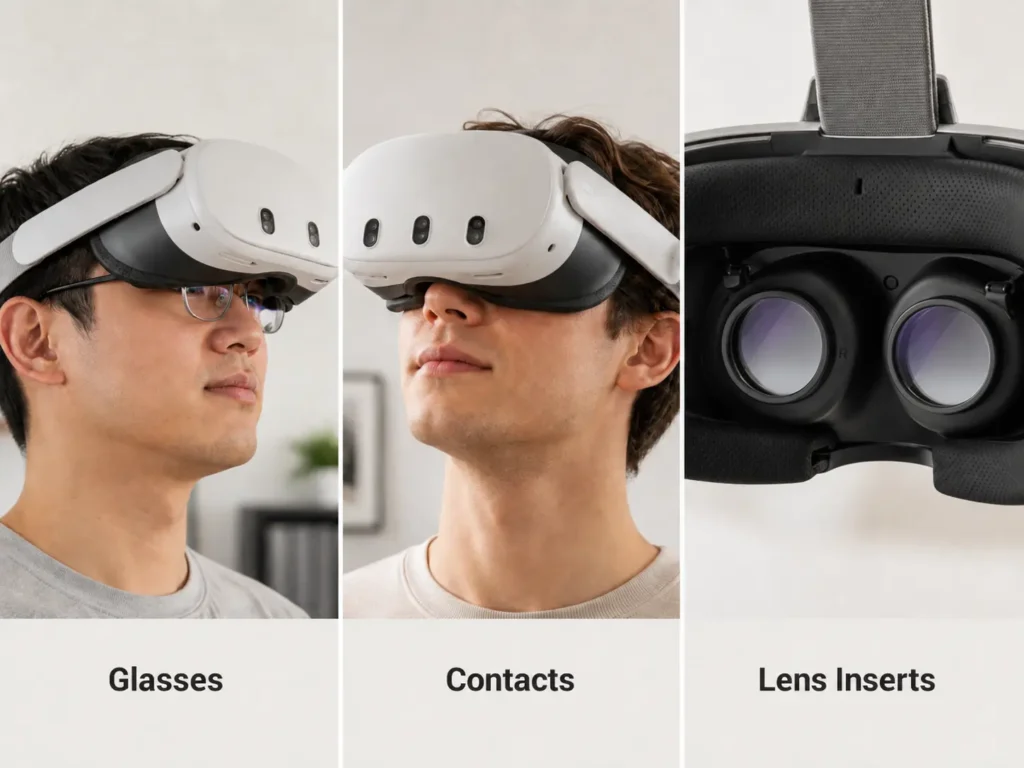
Glasses vs Contact Lenses vs VR Prescription Inserts
Glasses are convenient because you already own them, but they can feel cramped in VR. Contact lenses keep the headset space clear, but not everyone can wear them comfortably for long sessions. VR prescription lenses provide a headset-specific option that removes the eyeglass frame from the fit and may create a more stable setup for frequent use.
Best Option for Quest 3, Quest 2, PSVR2 and XREAL Users
For frequent Quest 3 users, Quest 3 prescription lenses may make the fit simpler by removing the eyeglass frame from inside the headset. Quest 2 and Quest 3S users should choose Quest 2 / Quest 3S prescription lenses that are explicitly listed as compatible with those models; do not assume Quest 3 inserts will fit Quest 3S. PS VR2 users can compare PSVR2 prescription lenses, while XREAL and other AR-glasses users should use a prescription frame or insert made for the exact model.
When to Choose VR Prescription Lenses
Prescription lens inserts may be worth comparing if you use VR often, feel pressure from your glasses, worry about lens contact, or want a simpler setup. They can also provide a more stable correction position during active play. If you use VR only occasionally and your frames fit with adequate clearance, continuing to wear glasses may still be practical.
Headset-by-Headset Glasses Fit Notes
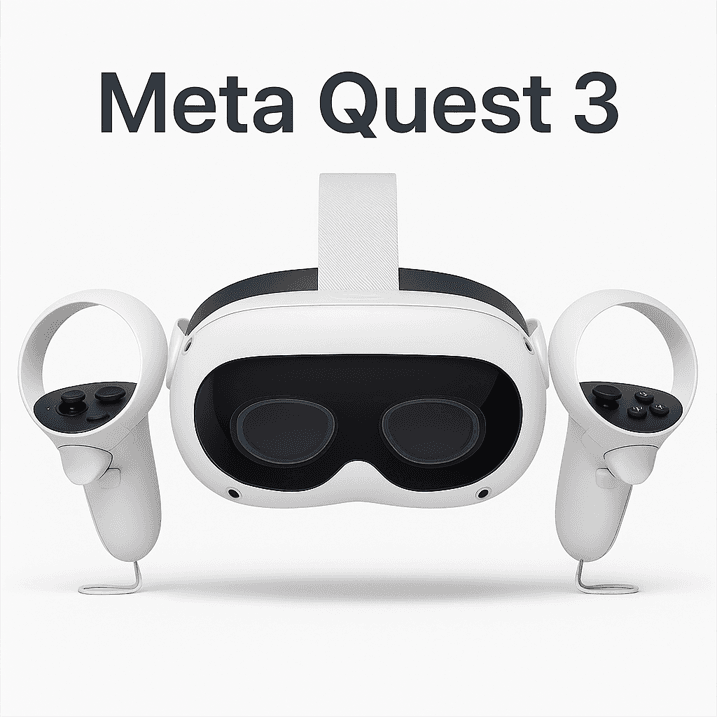
Meta Quest 3: Its facial interface includes depth adjustment to create more room between your eyes and the headset optics. Glasses can still press against the interface or sit close to the pancake lenses, depending on the frame. If you play often, dedicated Quest 3 prescription lenses may be easier than readjusting eyeglass frames for every session.
Quest 2 and Quest 3S: Follow the glasses-clearance guidance for the exact headset rather than assuming every Quest model uses the same adjustment method. For prescription inserts, choose a product explicitly listed for Quest 2 and Quest 3S. The ANNKUTVR Quest 2 / Quest 3S prescription lenses page lists both models and states that the inserts are not compatible with Quest 3.
PS VR2: PlayStation states that you can keep your glasses on while wearing PS VR2. Move the adjustable scope carefully and leave enough distance so the eyeglass lenses or frames do not contact the headset optics. PSVR2 prescription lenses are another option when the visor sits close to your glasses.
XREAL and AR glasses: These devices are worn as glasses rather than as a conventional enclosed VR headset. XREAL’s Air 2 guidance directs users who need vision correction to the provided prescription lens frame or to prescription contact lenses, so regular eyeglasses should not be worn underneath the device. Use a frame or insert designed for the exact XREAL or AR-glasses model.
How to Reduce Scratches, Fogging and Pressure
If you keep using glasses for VR, start with narrow frames, clean both sets of lenses before each session, and avoid pushing the headset tightly against your face. Use the spacer or depth adjustment specified for the exact headset. Increasing the distance between your eyes and the headset optics may affect field of view, so check the fit after each adjustment. Prescription inserts remove the eyeglass frame from the headset space and may reduce contact and pressure, but they do not guarantee that fogging or discomfort will disappear.
When Glasses Still Make Sense
Glasses can be a reasonable option for short demos, shared headsets, or occasional play when the frames fit and there is enough clearance. If you use VR several times a week, play active games, or repeatedly notice pressure, shifting, or possible lens contact, prescription inserts may provide a simpler and more stable setup.
Quick Decision Guide: Glasses for VR or Lens Inserts?
If you only use VR once in a while, glasses can be acceptable when the frames are narrow and the exact headset provides adequate clearance. For frequent sessions, fitness apps, or active games, prescription inserts remove the eyeglass frame from the headset and may provide a more stable fit.
| Situation | Best starting point | Why it matters |
|---|---|---|
| Short demos or occasional play | Small glasses when the exact headset has enough clearance | You can use frames you already own, but lens clearance still needs to be checked. |
| Daily gaming or workouts | Prescription lens inserts | Removing the eyeglass frame may provide a more stable fit and reduce a source of pressure or lens contact. |
| Astigmatism or a stronger prescription | Custom inserts within the product’s supported range | SPH, CYL, and AXIS values must match the prescription and supported options. |
| Shared headset | Removable inserts or careful frame spacing | A removable setup can keep each user’s correction separate. |
Check Your Fit Before Wearing Glasses in VR
- Frame width: Narrow frames often fit more easily than wide or unusually shaped frames.
- Lens clearance: Leave space between your eyeglass lenses and the headset optics before tightening the strap or moving the visor closer.
- Model-specific adjustment: Use the spacer, depth setting, or eye-relief adjustment specified for the exact headset.
- Nose and temple pressure: Reposition or stop if the headset pushes the frame into your face.
- Movement: Active games can shift glasses even when the fit feels acceptable while sitting.
- Cleaning: Clean your glasses and the headset lenses with methods approved for each product before use.
Prescription Details That Matter in VR
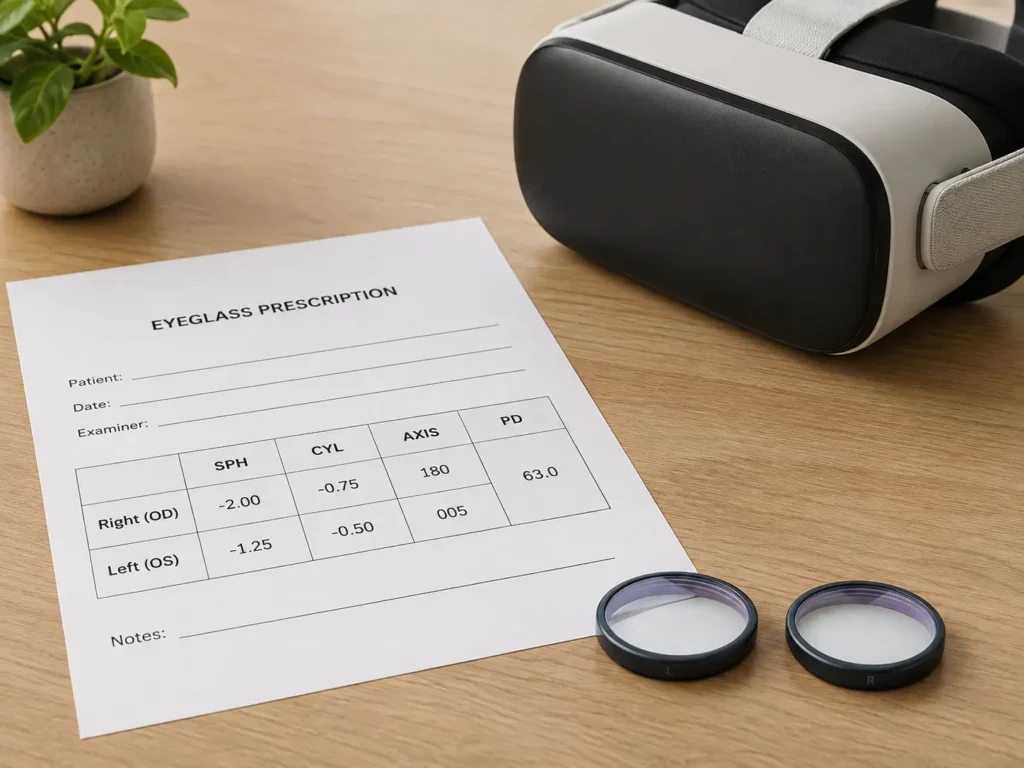
VR headsets use a model-specific optical focal distance. For example, Sony lists the PS VR2 focal distance at approximately 2 meters, while some VR lens providers instruct users to enter their distance prescription. Always follow the prescription requirements for the exact headset and lens product rather than applying one device’s focal distance to every VR headset.
Check SPH, CYL, and AXIS values carefully. Many custom inserts can support astigmatism when the required CYL and AXIS values fall within the product’s supported prescription range. Do not assume that every insert supports every prescription.
PD and IPD requirements also vary by headset and lens product. Some prescription insert forms request PD, while others rely primarily on the headset’s IPD adjustment or make PD optional. Follow the requirements on the exact product page, and ask an eye-care professional if you are unsure which values to use.
Recommended Starting Points by Headset
- Meta Quest 3: Compare Quest 3 prescription lenses if you play often or want to remove the eyeglass frame from the headset fit.
- Quest 2 / Quest 3S: Use the Quest 2 / Quest 3S prescription lenses page and do not assume Quest 3 inserts will fit Quest 3S.
- PS VR2: Check PSVR2 prescription lenses when the adjustable scope sits close to your glasses.
- RayNeo and XREAL: Use a model-specific prescription frame or insert because these are AR-glasses devices, not conventional headsets designed to sit over regular eyeglasses.
- Ray-Ban Meta: Smart-glasses users should choose supported Ray-Ban Meta prescription lenses rather than a VR-style insert.
Comfort Tips If You Still Use Glasses for VR
If you continue wearing glasses in VR, loosen the headset first, place it over your frames without forcing them, and tighten or move the visor slowly. Stop and readjust if you feel the eyeglass lenses or frames contact the headset optics. Avoid wet cleaners unless the headset manufacturer specifically approves them, and take breaks during warm or active sessions.
FAQ
What frame size works best for glasses in VR?
Narrow, low-profile frames often leave more room inside a headset’s facial interface. Wide frames and thick temples are more likely to press against your face or contact the headset optics, but the actual fit depends on the exact headset and frame dimensions.
Do glasses reduce field of view in VR?
They can. A spacer, depth adjustment, or thicker frame may move your eyes farther from the headset optics, which can reduce field of view. The effect depends on the headset and facial-interface fit.
Should I use inserts for active VR games?
Prescription inserts can be more stable during active play because eyeglass frames are no longer moving inside the headset, which may also reduce the chance of contact with the headset optics.
Can you wear glasses in VR?
Yes, when the exact headset and frame leave enough clearance. Smaller frames may fit more easily, but you should follow the glasses guidance for the specific headset.
Can glasses scratch VR lenses?
They can if the eyeglass lenses or frames contact the headset optics. Check clearance before tightening the headset and stop if you feel contact.
Are VR prescription inserts better than glasses?
For frequent VR users, prescription inserts can provide a simpler and more stable fit because the eyeglass frame is removed from inside the headset. Occasional users may still be comfortable using properly fitting glasses.
Do VR prescription lenses work with astigmatism?
Many custom inserts can support astigmatism when the required CYL and AXIS values fall within the product’s supported prescription range. Check the exact product page before ordering.
What is the best way to see clearly in VR?
The appropriate option depends on your prescription, headset fit, and supported correction method. Follow the requirements for the exact headset and lens product.