Enjoy 5% OFF + FREE shipping on orders $49+! Use Code: 202512AK5

Do RayNeo GT and GT Max Support Prescription Lenses? What Glasses Wearers Need to Know
Yes. Both RayNeo GT and RayNeo GT Max support prescription-lens solutions.
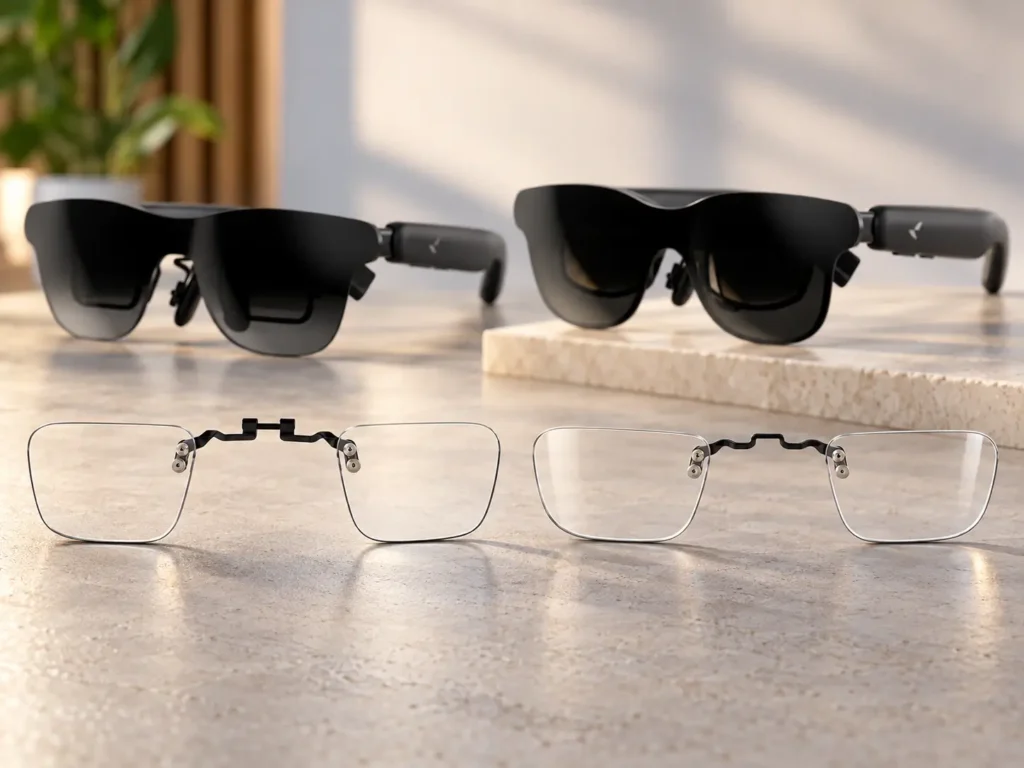
RayNeo’s current GT Series support documentation lists a Prescription Lens Sample in the box for both models and tells nearsighted users they can either use RayNeo’s optical partner or take the included prescription-lens frame to a local optical store for fitting.
But there are three details glasses wearers should understand before ordering:
- GT and GT Max should be treated as separate prescription-insert models.
- Prescription correction does not change the IPD fit of the glasses.
- Your prescription insert should be made from a current eyeglass prescription rather than guessing from an old pair of glasses.
If you already wear prescription glasses, the useful question is therefore not simply “Does GT support prescriptions?” It is which insert you need, which prescription values matter, and whether the device itself already fits your eyes correctly.
Yes — RayNeo GT and GT Max Are Prescription-Ready
RayNeo has designed both models with prescription users in mind.
The current official GT Series documentation lists a prescription lens sample with both GT and GT Max, while RayNeo’s prescription guidance describes custom Rx inserts as the intended correction method for users with myopia or astigmatism.
Here is the part that matters for glasses wearers:
| Prescription Detail | RayNeo GT | RayNeo GT Max |
|---|---|---|
| Prescription support | Yes | Yes |
| Prescription lens sample included | Yes | Yes |
| Device IPD design | Fixed 64mm | S / M / L IPD sizes |
| Prescription insert selection | Choose an insert made for GT | Choose an insert made for GT Max |
The last row matters.
RayNeo’s current prescription ordering guidance directs users to select an insert for the specific model, either GT or GT Max. So even though both belong to the GT Series, you should not assume one prescription insert can simply be transferred between them.
If you are still deciding between the two devices themselves, see our RayNeo GT vs GT Max comparison rather than using prescription compatibility as the main deciding factor. Both models support prescription correction.
How Prescription Lenses Work With RayNeo GT and GT Max
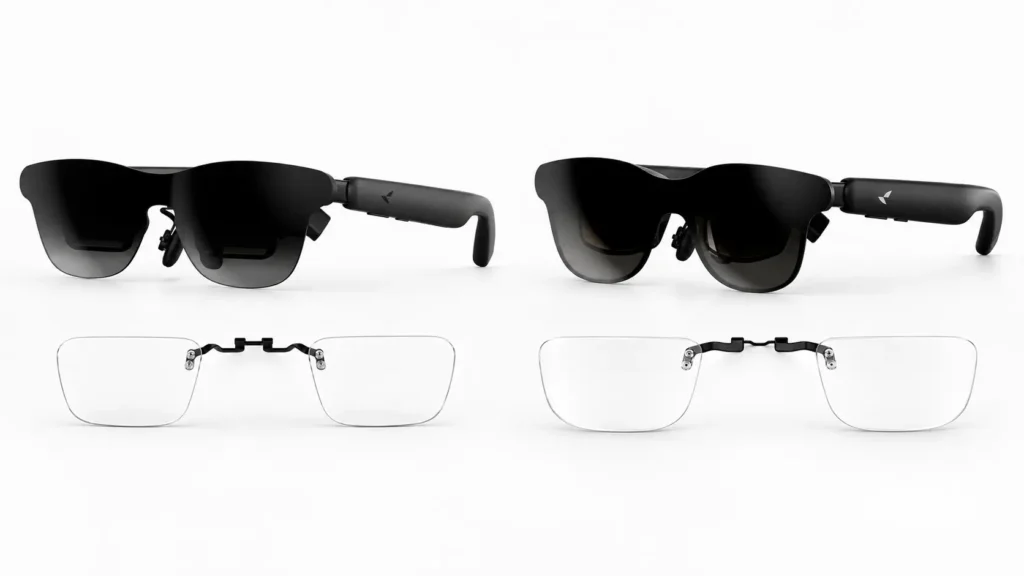
The prescription solution is an insert, not a replacement for the GT or GT Max display optics.
The AR glasses keep their original optical system in place. A prescription lens insert sits between your eyes and the display optics so your refractive correction is present while you look through the glasses.
RayNeo’s own prescription guidance describes custom inserts as a way to correct vision without stacking everyday prescription glasses underneath the AR frame.
That is the key distinction:
The GT provides the display.
The prescription insert provides your vision correction.
For ANNKUTVR users, that means you should first identify the exact headset model and then order the corresponding insert:
You can also use the RayNeo Prescription Lens Hub if you are comparing several RayNeo devices.
GT and GT Max Should Use Model-Specific Prescription Inserts
This is where a simple “Yes, both support prescriptions” answer becomes incomplete.
RayNeo currently routes GT and GT Max prescription orders separately and tells users to choose the insert for their specific model.
So the safe rule is:
GT owner → GT prescription insert
GT Max owner → GT Max prescription insert
Do not assume that two products in the same RayNeo series use the same insert geometry.
The prescription values may be identical between your two eyes or between two different devices, but that does not mean the physical frame or mounting structure is identical.
This is especially important if you already own an older RayNeo prescription insert. Compatibility should be confirmed by the exact model rather than by brand name alone.
What Prescription Should You Use?
RayNeo recommends starting with a current eyeglass prescription when ordering prescription inserts. Its current prescription guide specifically advises users to obtain an up-to-date prescription before ordering lenses.
For most orders, the important values are:
- SPH for spherical correction
- CYL if you have astigmatism
- AXIS when CYL is present
- separate values for the right and left eye
You do not need to turn the GT or GT Max order into an optometry lesson. What matters is copying the values exactly from your prescription rather than estimating them.
What About Strong Myopia or Astigmatism?
RayNeo’s current GT Series Support page states that its prescription-lens route can customize:
- myopia from 0 to -10.00D
- astigmatism up to -2.00D
That should be treated as RayNeo’s currently published support range for its prescription pathway, not automatically as the manufacturing limit of every third-party optical lab.
If your prescription falls outside a published range, or includes unusual values, confirm it with the lens provider before ordering.
That is more reliable than assuming that every prescription insert supplier has the same optical range.
Prescription Lenses Do Not Fix GT Max IPD
This is the most important distinction after prescription compatibility.
A prescription insert corrects refractive error.
IPD determines how your eyes line up with the device’s optical viewing position.
Those are two different variables.
RayNeo GT uses a fixed 64mm IPD design, while GT Max is sold in S, M and L IPD versions. RayNeo’s current GT Max sizing is:
- S: below 64mm
- M: 64–67mm inclusive
- L: above 67mm
Adding prescription lenses does not turn the wrong GT Max IPD size into the correct one.
If you have not selected your GT Max size yet, use our RayNeo GT Max IPD Size Guide before ordering the prescription insert.
The sequence should be:
Choose the correct GT Max IPD size first.
Then:
Add the correct prescription correction for your eyes.

Can You Just Wear Regular Glasses Under RayNeo GT or GT Max?
Some users may wonder whether they can simply keep their ordinary eyeglasses on and place GT or GT Max over them.
The more relevant point is that RayNeo already provides a dedicated prescription-insert path for these devices. Its current guidance specifically describes prescription inserts as an integrated alternative to stacking ordinary prescription glasses underneath the AR frame.
That does not mean every pair of ordinary glasses is physically impossible to use underneath.
Frame width, lens shape, bridge geometry and face shape vary too much for that blanket claim.
But wearing two separate frames creates additional variables:
- nose-bridge spacing
- temple pressure
- distance between your eyes and the display
- possible movement between the two frames
A dedicated prescription insert removes one complete eyeglass frame from that setup.
For users who regularly need vision correction, that is the cleaner configuration to evaluate first.
What Glasses Wearers Should Check Before Ordering
Before ordering prescription lenses for GT or GT Max, check these six things.
1. Confirm Your Exact RayNeo Model
Do not order based only on “RayNeo GT Series.”
Confirm whether you own:
RayNeo GT or RayNeo GT Max
Then choose the corresponding prescription insert.
2. If You Have GT Max, Confirm S / M / L Separately
The prescription does not determine your GT Max IPD size.
Measure your IPD and select the device size separately.
3. Use a Current Prescription
Do not rely on a several-year-old prescription just because your ordinary glasses still feel usable.
Prescription inserts are custom optical products. The values entered during ordering determine what is manufactured.
4. Copy CYL and AXIS Exactly
If your prescription contains astigmatism correction, do not omit CYL or AXIS.
A prescription that is “almost right” is still a different prescription.
5. Confirm High or Unusual Prescriptions First
If your prescription is outside a supplier’s published range, includes significant positive SPH, high astigmatism or another special requirement, confirm manufacturability before ordering.
6. Keep IPD and Prescription as Separate Checks
A sharp prescription cannot correct a device alignment problem.
Likewise, the correct IPD does not correct myopia or astigmatism.
Both have to be addressed independently. If your display is still blurry, use our RayNeo GT and GT Max edge-blur checklist before changing your prescription.
FAQ
Can RayNeo GT and GT Max use prescription lenses?
Yes. RayNeo officially supports prescription-lens solutions for both GT and GT Max. Both models currently include a prescription lens sample/frame in the box, and users can have prescription lenses fitted through an optical provider.
Do RayNeo GT and GT Max use the same prescription insert?
Do not assume they are interchangeable. RayNeo currently routes prescription ordering by exact model, with separate GT and GT Max insert options. Choose a prescription insert specifically made for the device you own.
Do RayNeo GT and GT Max come with a prescription lens frame?
RayNeo’s current GT Series documentation lists a Prescription Lens Sample with both GT and GT Max. This is not a finished custom prescription lens with your personal prescription already installed; the lenses still need to be made according to your prescription.
Can prescription lenses fix an IPD mismatch on RayNeo GT Max?
No. Prescription lenses correct refractive errors such as myopia or astigmatism. GT Max S, M and L sizing addresses interpupillary-distance alignment. The correct prescription cannot compensate for choosing the wrong GT Max IPD size.
What prescription should I use for RayNeo GT or GT Max inserts?
Use a current eyeglass prescription and enter the right- and left-eye values exactly as written. SPH is required for spherical correction, while CYL and AXIS should also be provided when astigmatism correction appears on your prescription. High or unusual prescriptions should be confirmed with the lens provider before ordering.