Enjoy 5% OFF on all orders over $49 + FREE shipping! Use code: 202512AK5

how are lenses for VR glasses made?
Table of Contents
Virtual reality (VR) glasses are transforming how we experience digital worlds. At the heart of this technology are the lenses, which are crucial for creating an immersive experience. These lenses are designed to enhance clarity and reduce distortion.
The process of making lenses for VR glasses is intricate. It involves precise cutting, shaping, and polishing to ensure high optical quality. Companies like ANNKUTVR are at the forefront, offering customizable options for users with specific vision needs.
Prescription lenses can be integrated into VR glasses, allowing users to enjoy VR without additional eyewear. This customization ensures a comfortable and clear virtual experience. As VR technology advances, the demand for high-quality lenses continues to grow.
The Importance of Lenses in VR Glasses
Lenses are central to the VR experience. They are responsible for projecting digital images into a lifelike 3D space. Without high-quality lenses, users may experience blurriness or distortion.
VR lenses must be expertly crafted to ensure visual clarity and reduce strain. The design of these lenses aims to provide a natural field of view, matching how we see in real life.
Some key features of VR lenses include:
- Enhanced clarity
- Reduced distortion
- Compatibility with prescription adjustments
By focusing on these elements, VR lens manufacturers help to create a seamless virtual environment that feels realistic. As VR technology evolves, the precision in lens manufacturing becomes even more vital.
Materials Used for VR and Prescription Lenses
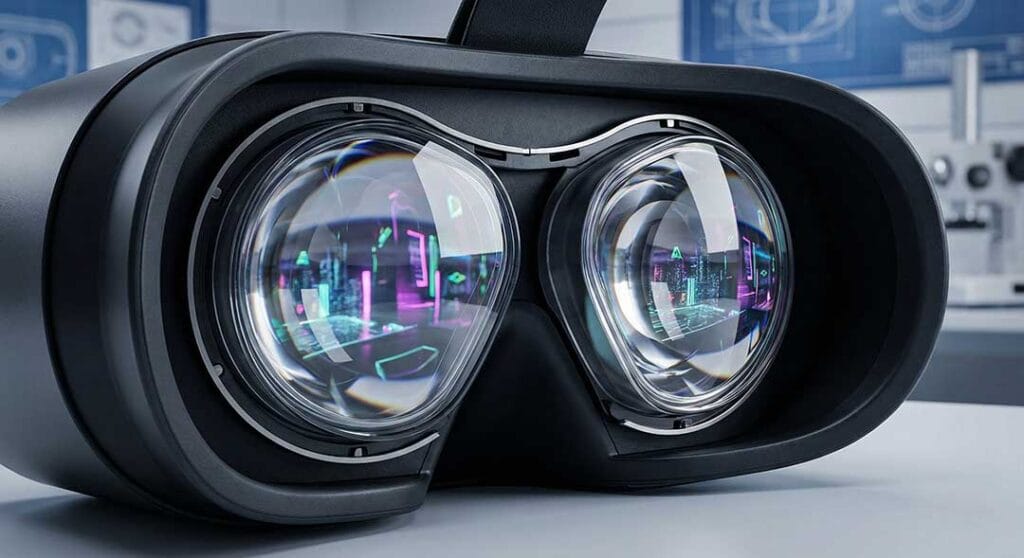
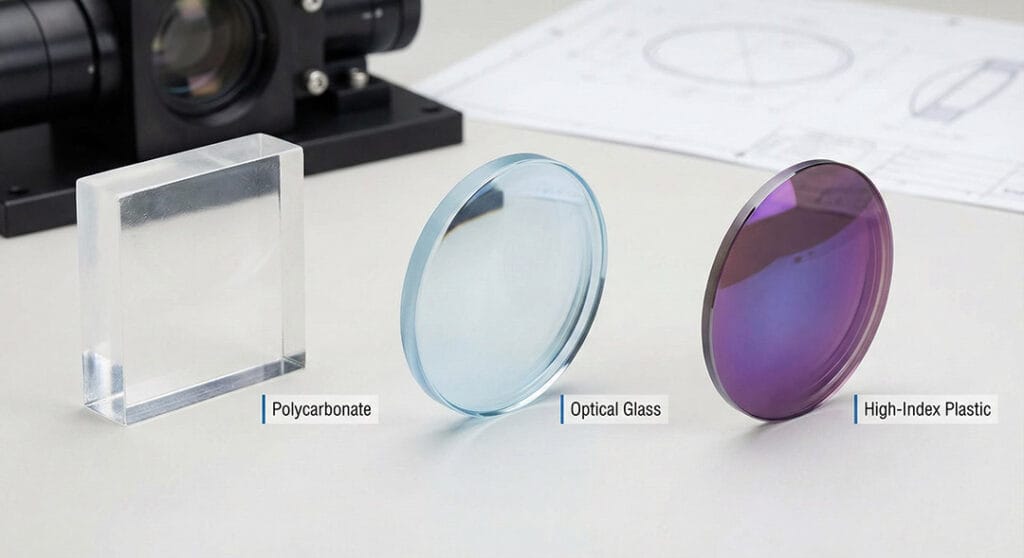
The choice of materials is crucial in crafting lenses for VR glasses. High-quality VR lenses are typically made from durable materials like polycarbonate or acrylic, known for their lightweight and strong properties. These materials ensure the lenses are less prone to breakage while maintaining optical clarity.
In addition to standard VR lenses, prescription lenses require precise customization. The materials used in prescription lenses include:
- Polycarbonate
- CR-39 plastic
- High-index plastic
Each material offers unique benefits, such as impact resistance or thinner design, which contribute to an overall better VR experience. The durability and optical quality of these materials are essential for both VR and prescription lenses, providing users with a clear and immersive experience.
The Manufacturing Process: From Design to Production
Crafting lenses for VR glasses involves several meticulous steps. Initially, optical engineers and VR designers collaborate to create the lens design. This includes calculating the curvature needed to match the natural field of view. Next, the design aims to minimize distortion and maximize clarity.
The lens-making process begins with selecting the right material. Precise cutting and shaping follow this, aligning with the detailed design specifications. Advanced equipment ensures the lens shape is consistent with VR needs.
Following shaping, lenses undergo polishing. This step is crucial to achieving a smooth and reflective surface. Anti-reflective coatings may also be applied to prevent glare during use.
Key steps in lens production include:
- Design creation
- Material selection
- Precise shaping and cutting
- Polishing and coating
Finally, lenses are tested rigorously for optical quality. This ensures they meet industry standards and provide the user with an optimal experience. Any imperfection in the lens can affect virtual realism, making this process vital.

Customizing VR Glasses with Prescription Lenses
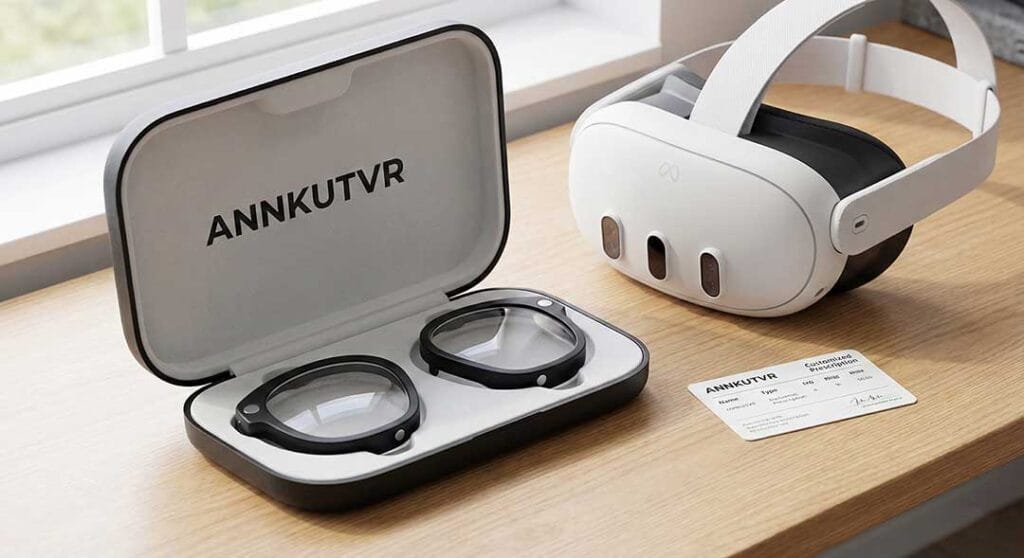
VR glasses can be tailored with prescription lenses. This helps those with vision impairments experience VR without additional eyewear. By incorporating prescription lenses directly, users enjoy seamless immersion.
Customization begins with an eye prescription. Lenses are then crafted to match the user’s specific vision needs. This ensures clarity and comfort during VR sessions. The process integrates prescription data into VR-compatible lens designs.
Key customization steps include:
- Obtaining an eye prescription
- Designing lenses based on prescription
- Crafting lenses for VR compatibility
Companies like ANNKUTVR offer these customizable options. This allows more users to explore VR technology comfortably. By aligning vision correction with VR, users gain a richer and more accessible virtual experience.
Innovations and the Future of VR Lenses
The evolution of VR lenses continues to gain momentum. Ongoing advancements aim to elevate user comfort and visual quality. New materials and designs promise to make lenses even lighter and more durable.
Emerging trends in VR lens technology include:
- Aspheric lens designs for sharper images
- Enhanced coatings to reduce glare and reflections
- Integration of smarter, adaptive lens technology
These innovations signify a bright future for VR experiences, expanding possibilities for all users. As technology advances, VR glasses will become more immersive and accessible.
Conclusion: Enhancing the VR Experience with Quality Lenses
Quality lenses are the backbone of any exceptional VR experience. Their design and precision are crucial for realism and immersion. As technology evolves, so does our ability to enjoy more vivid virtual worlds.
By integrating advanced lens technology, VR glasses like those from ANNKUTVR offer unparalleled user experiences. The future promises even greater strides, ushering in a new era of virtual reality.